Catch up with our latest blogs

Looking for inspiration for a family adventure on the coast, a romantic weekend break star gazing under dark skies, or relaxing walks on the beach spotting wildlife? Visit Northumberland has got you covered, with our round up of inspiring blogs. Our inspirational blogs will make you want to discover some of the best attractions Northumberland has to offer, hidden gem spots captured in film and television series like Vera and Robson Green’s Weekend Escapes, the most delicious food and drink places, including our favourite takeaway spots for fish and chips, or restaurants for the ultimate Sunday lunch, as well as activities and events taking place in the area throughout the seasons, whether you need to find the perfect local comfort food for winter or the most scenic spots to enjoy a day out with the family, there is something for everyone to experience in Northumberland.

The Latest

18 April 2018

Wellie Walks

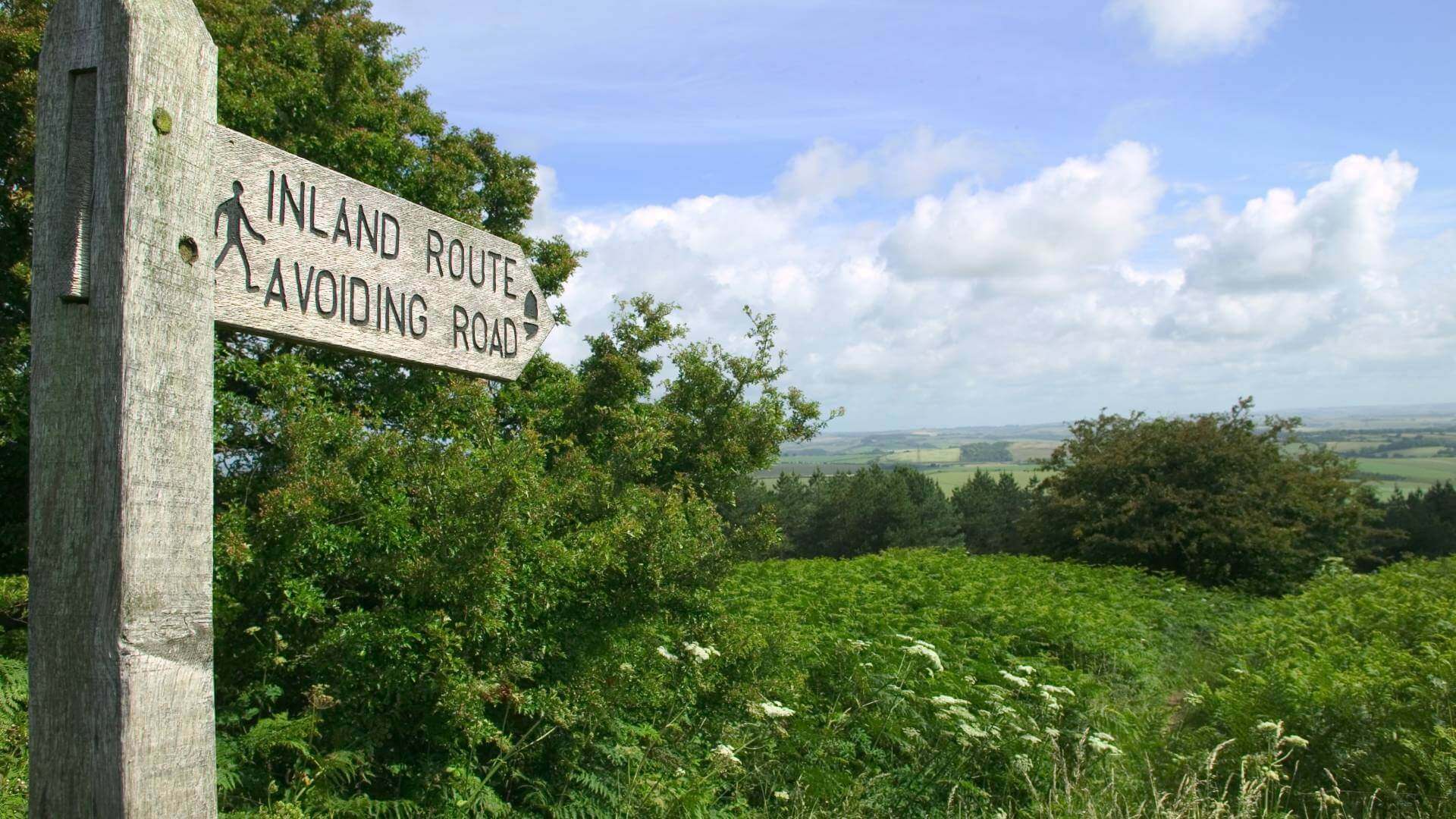
Get clarty (noun; getting muddy) Nobody expects this time of the year to be full of sunshine but those crisp spring days, when they arrive, are great for escaping out into the countryside for a walk. With vast open spaces inland and along the coast, there’s a walk to suit all abilities in Northumberland. So pull on those wellies, grab a coat and squelch your way around Northumberland on one of these walks: Falstone Circular Walk A lovely ramble around the riverbank and old railway line. The railway line you follow was once part of the Border Counties line that was in use between 1862 and 1958. Pass the Falstone Stell, designed by artist Colin Wilbourne in 2006, which was inspired by the areas rich natural and cultural history and a record of place names now submerged beneath Kielder Water. Find out more about the Falstone Circular Walk. Linhope Spout Walk through the Breamish Valley to see one of the most spectacular waterfalls. A 60ft (18m) chute of water which lands in a plunge pool 6ft (2m) wide and 16ft (5m) deep. Keep your eyes peeled for wildlife, red squirrels have been spotted here, especially on the forest floor. Find out more about Linhope Spout. Windy Gyle Apart from the Cheviot itself it must be one of the most known summits in Northumberland. This wonderful route is not for those looking for an easy amble. Following ‘The Street’, an old drovers road to the border fence you cross over into Scotland to reach the summit of Windy Gyle. Discover more about the Pennine Way walk.  Hadrian’s Wall from Steel Rigg This walk covers a section of Hadrian’s Wall. Starting from Steel Rigg, this route includes a visit to Housesteads Roman Fort and the dramatic scenery of Hotbank Crags and Crag Lough. Craster to Low Newton Coastal Walk A wonderful walk all year round, this walk sets off from the fishing village of Craster. Don’t forget to call in and buy some of the famous Craster Kippers. You’ll pass the ruins of Dunstanburgh Castle, and the long sweep of Embleton Sands before reaching Low Newton by the Sea. If you complete one of these walks, share your snaps with us on one of our social media channels: Facebook @visitnorthumberland Twitter @visitnland Instagram Visitnorthumberland  
View More
19 January 2018

Tread the path of legendary tea seller Isaac Holden

Whatever your favourite type of landscape, you’ll find it in Northumberland. And as you seek it out and enjoy its wonders, you’re unlikely to be among hordes of other people doing the same. The county is a walkers’ wonderland with a special treat in its south west corner: Isaac’s Tea Trail. The 36-mile route in the North Pennines is named after a Victorian tea pedlar, Isaac Holden, and it is as much a journey through history as a fine walk through fabulous scenery. Most people start it in the village of Allendale, although it can be started at any point and walked clockwise or anti-clockwise. From Allendale the Tea Trail follows the River East Allen upstream before hopping over high moors to Nenthead and then following the River Nent downstream to Alston. Then after joining a short section of the Pennine Way above the River South Tyne, it heads up and over the moors again to the valley of the Mohope Burn which flows into the River West Allen. From there the return to Allendale is over high pasture, through woodland and alongside the River East Allen. The route is well signposted, and you’ll often see old teapots in the gaps of stone walls, teacups hanging from waymarkers and vintage tea adverts as a reminder of Isaac Holden’s trade. He was born into a lead-mining family in around 1805 and went to work at the mine as a boy. Ill health and the decline of mining forced him to find other work, and he ended up running a grocery in Allendale. He sold his tea door-to-door, walking miles to remote farms and hamlets, and at the same time raised money for community projects. Walking Isaac’s Tea Trail you will pass reminders of many of his fund-raising achievements. You will also enjoy a wonderful variety of scenery, from high heathery hills to leafy dingly dells. There are a few oddities to look out for along the way. There’s an RAF Jet Provost parked in a farmyard, there’s a sinister stone troll under a footbridge, narrow-gauge steam trains can suddenly come chugging through the view, and the route passes a miniature village which is gradually taking over the garden of a bungalow. Everywhere along Isaac’s Tea Trail there are signs of the area’s rich heritage. The remains of a Roman fort and ramparts are clear to see, bastle houses testify to the tyranny of the Border Reivers when homes had to be fortified against violent raiding parties, and there is extensive evidence of lead mining. The industry’s heyday was in the 18th century, when this region was world famous for producing lead and other minerals, but although mine workings are still visible, they are certainly not scars on the landscape. They are evocative and fascinating, and an integral part of the North Pennines scenery. I’ve been walking parts of Isaac’s Tea Trail regularly since I started my blog in October 2015 and I never get bored with it. Each season brings different delights and I can always find a section of the Tea Trail that matches my mood, energy levels and the day’s weather conditions. Walking conditions along the 36-miles of the Tea Trail vary from level grassy paths to steep stony tracks. There are some boggy sections and the high-level moorland crossings are exposed to the elements, but I don’t consider myself a strong walker and the route is within my capabilities. Mind you, I only do short sections of it and I haven’t walked it all in one go. If you want to do the whole route as one expedition, the official guide recommends four sections: Allendale to Nenthead (11miles/18km), Nenthead to Alston (6 miles/9km), Alston to Ninebanks (12 miles/19km) and Ninebanks to Allendale (8 miles/13km). In total there are more than 5,000 feet of ascent. As the route celebrates a purveyor of tea there are many refreshment opportunities along the way. Cafes and pubs in Allendale, Nenthead and Alston are directly on Isaac’s Tea Trail, and a short detour takes you to similar establishments in Allenheads and Whitfield. There is accommodation at each location, and a Youth Hostel at Ninebanks. The Tea Trail was created in 2001 by Roger Morris as part of his passion for the region’s history, and its reputation as a great walk attracted TV presenter Clare Balding to sample a section of it for her Radio 4 series Ramblings. In the photo below Roger Morris is on her right, with her producer Lucy Lunt and Andy Lees from the North Pennines AONB Partnership on her left. By all accounts Isaac Holden was a bit of an eccentric, but his fund-raising brought genuine benefits to the poorer people of the North Pennines in Victorian times. I often think of him as I walk the paths he must have walked, and I hope he stopped to enjoy the views and the special nature of this area. I certainly do, every single time I’m out there. Blog provided by Anne Leuchars To read more about Isaac’s Tea Trail follow Anne’s blog and the Allen Valleys website where there is more information about Isaac’s Tea Trail including a link to Clare Balding’s Radio 4 Ramblings programme, and information about where to buy the official guide to the Tea Trail.  
View More
05 December 2017

10 top night and day things to do in Northumberland

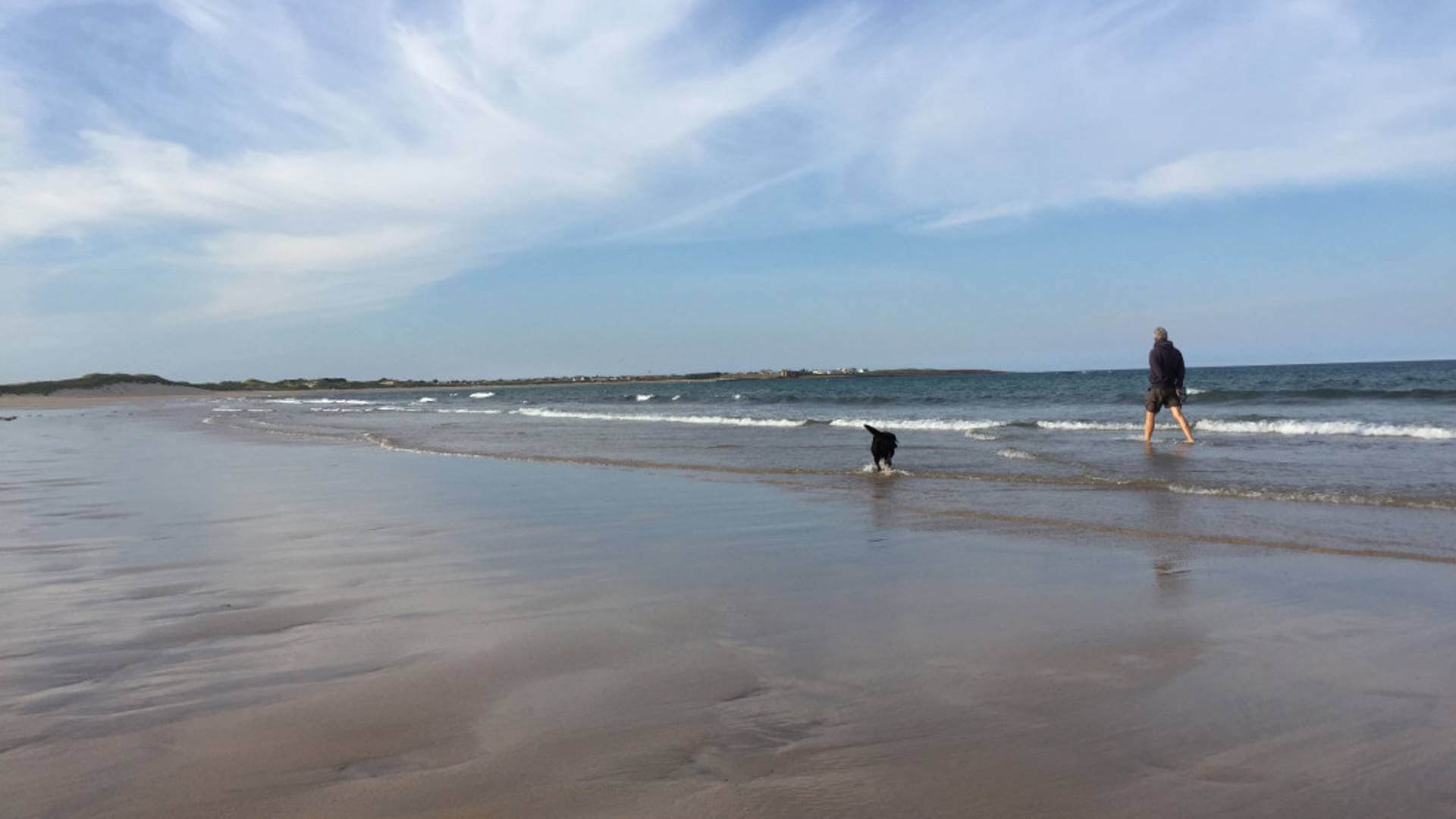
Coastal Retreats owner Fiona McKeith has holidayed in Northumberland since she was a child. Come summer or winter, rain or shine, here are her ten favourite things to do… 1. Do the circular walk from Craster to Dunstanburgh Castle, enjoy some fish soup and crab sandwiches in The Jolly Fisherman and stock up on freshly smoked kippers for supper from Robson's Smokery. 2. Visit The Alnwick Garden and Alnwick Castle. Let the children explore the interactive water gardens, learn about how common garden plants can be deadly in the poison garden and walk the wobbly bridges at the Treehouse Restaurant. The Treehouse is a truly magical restaurant, especially at night, but you will need to book ahead as it is extremely popular. At Alnwick Castle you can see where Harry Potter was filmed and undertake a spot of broomstick training yourself. 3. There is a beautiful walk from Seahouses to Bamburgh along the beach (at low tide, parts of a shipwreck can be seen half way along). Visit the interactive Grace Darling Museum, pop over the road to see the beautiful little church where this young heroine is buried, then walk back to Seahouses at high tide along the beach or dunes. There is a superb spot on the rocks at Seahouses, next to the old wartime ammunition hut, where you can have an evening beach BBQ. It's an amazing place to watch the sun go down while the children are doing a spot of rockpooling. 4. Take afternoon tea at the former home of Earl Grey (namesake of the tea), Howick Hall and Gardens. It's like stepping back in time and is a marvellous place for tea and cucumber sandwiches. 5. A trip to Holy Island. Holy Island is linked to the mainland by a causeway only passable at low tide. It is important to check the timetable for safe crossing times before setting out as you don't want to get caught out. It is a truly unique and mystical place to visit with amazing sea views, the iconic ruins of Lindisfarne Priory and the weather-beaten Lindisfarne Castle. 6. Cycle to Ross from Bamburgh. Leave your bikes locked up at Ross and walk over the sand dunes (about 30 minutes) to the most beautiful deserted beach with amazing views of Holy Island. Once on the beach, if you head north for another 45 minutes, and the tide is very low, you may be lucky enough to see a shipwreck. 7. Walk from Beadnell along the beach, dunes and bays to Newton-by-the-Sea and dine at The Ship Inn. Football Cove, along the route, is a real find, but don't swim there as the currents are strong. It's very sheltered and is a great place for sunbathing or fishing. 8. Browse through thousands of second hand books at Barter Books in the old railway station at Alnwick. There's a lovely cafe inside the store and some squashy sofas where you can browse the books at your leisure. 9. Spend the day, or night, at Chillingham Castle - known as the UK’s most haunted castle. Here you'll find an eclectic mix of museum artefacts ranging from invitations from Buckingham Palace, personal letters from Jules Holland, old wooden skis used on Everest expeditions, torture chamber contraptions and letters warning you not to steal the silverware or you'll be struck down by the curse! You can book a ghost tour at night and, if you’re brave enough, stay in one of the apartments. 10. Finally, you can’t beat a glass of wine in the lovely surrounds of one of our Retreats, taking in those amazing starry night skies clear of any light pollution. Please note: some places mentioned above are closed in the winter months or have limited opening hours from the end of October to March, so please do check ahead before you visit. For more information on what to do and hidden gems in Northumberland during the winter months, check out #NlandStars
View More
13 August 2017

Follow in the footsteps of the Vikings

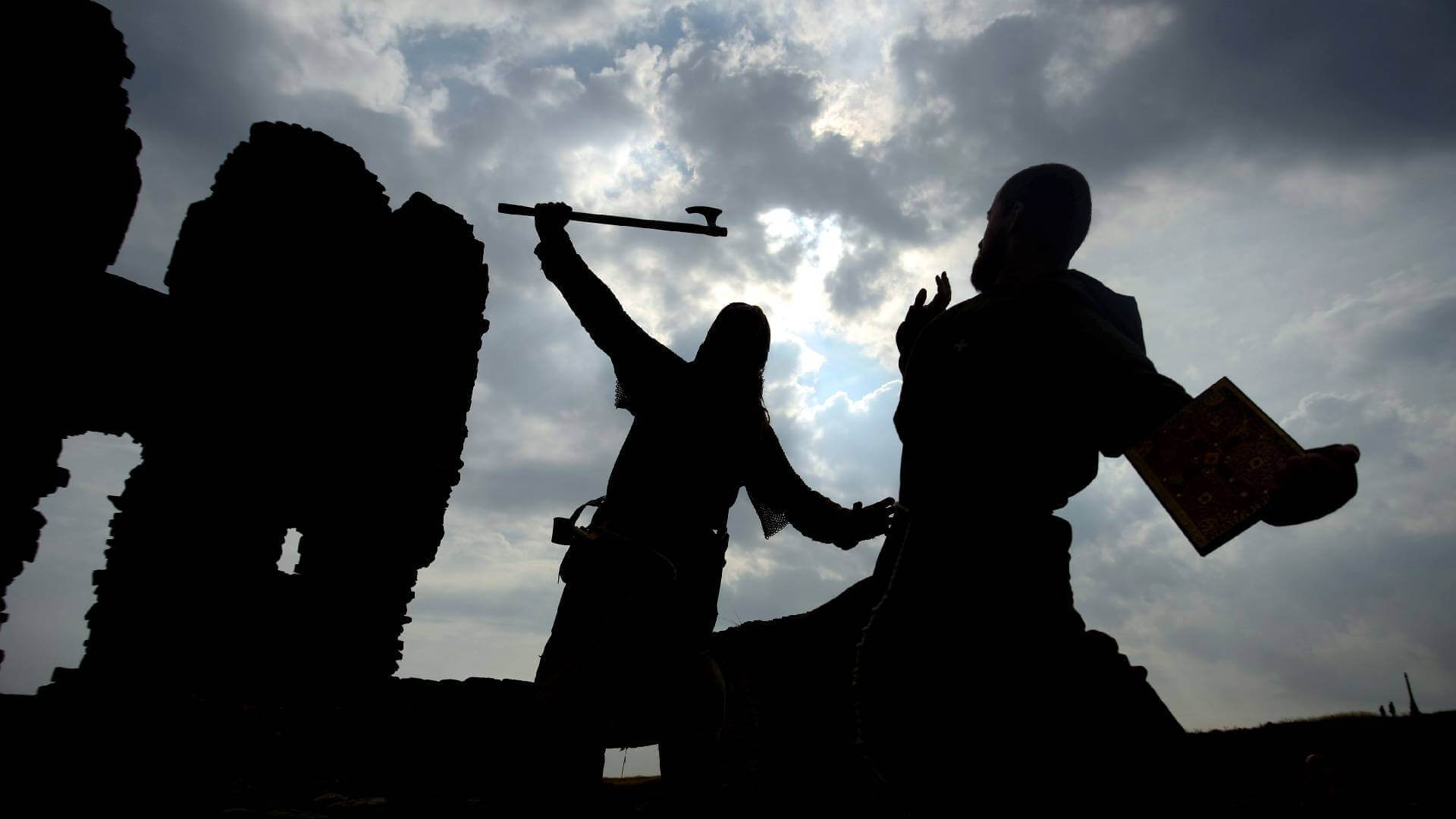
From Border Reiving to Roman occupation, Northumberland has more than its fair share of turbulent history. We flock to see relics of this past, but we often overlook another monumental moment in the county’s history… Viking invasion! Join us as we follow the chronological events from the moment the Vikings landed on our coastline, taking us on a journey to the iconic Northumbrian attractions and destinations affected by the invasion. 793 AD The sacking of Lindisfarne This was the first ever Viking invasion of the British Isles and signalled the beginning of the ‘Viking Age’. Skim over the sands to the Holy Island of Lindisfarne and to a world where a wealth of history and stunning views sit in perfect tranquility. Don’t forget to check the tide times before travelling! As you cross the causeway, look out for the line of wooden poles across the sand known as ‘Pilgrim’s Way’ – the original route from the mainland. Lindisfarne Priory Sat nav TD15 2RX Founded by St Aidan in AD635, the historic site owes its fame to the great Northumbrian holy man St Cuthbert, who lived and died there. Stroll around the monastic buildings which formed the living quarters of the monks. Imagine this peaceable lifestyle being shattered by the marauding Vikings. Lindisfarne Priory is now owned by English Heritage. Wander the richly-decorated, extensive ruins; discover the fascinating history of this site in the exciting visitor centre, such as the story of the monks who lived on Holy Island, the grisly Viking invasions and the part which Henry VIII played in the history of the Priory. Whilst there be sure to visit a later addition to Holy Island…   Lindisfarne Castle Sat nav TD15 2SH In the 16th century, stones from the now-ruined Priory were used to build a fort atop the ancient black basalt known as the Whin Sill at the tip of the island to defend the English-held harbour from the Scots. The idyllic location of the castle has intrigued and inspired for centuries. Please note, Lindisfarne Castle is closed to the public whilst it is undergoing extensive renovation work until Spring 2018. The colourful Gertrude Jekyll Garden at the foot of the castle is still open, and is incredibly beautiful this season. Travel down the beautiful coastline made up of endless beaches, rugged cliffs and undulating dunes. Can you believe the serenity of this landscape was shattered by Viking raids for the next 70 years? Stop off at Druridge Bay, a large stretch of beach recently used as a location for the TV remake of Viking legend, ‘Beowulf’. No pillaging! 875AD Ransacked the monastic town of Hexham At this time, the kingdom of Northumbria extended from the River Humber to the Forth of Firth spanning coast to coast. It is believed that in the area of Northumbria once known as Bernicia, in which modern-day Northumberland now sits, resistance to Viking rule was the strongest. We’re hardy folk! However, the Vikings were not known for giving up easily, and persisted with their attack on Northumbria, heading inland to ransack Hexham. Hexham Abbey Sat nav NE46 3NB Hexham Abbey is one of the earliest surviving Christian foundations in Britain. Originally a Benedictine Abbey, then an Augustinian Priory and the Parish Church of Hexham, it was founded in AD 674 by St Wilfrid. The crypt was lost underground for hundreds of years and is estimated to be over 1,300 years old. Take a peek into the visitor exhibition, which offers a hands-on experience charting the history of the Abbey and the town. Browse the gift shop for a range of souvenirs and local produce. Whet your appetite in the Refectory Cafe, with a cup of tea and a homemade scone. 993AD The Vikings seize control of Bamburgh Castle Bamburgh Castle Sat nav NE69 7DF Bamburgh Castle was the most important Anglo-Saxon stronghold in northern Northumbria, known as Din Guayrdi – Din meaning fortress. The current castle is predominantly Norman in design, built at vast cost in late Victorian times by famed industrialist, the first Lord Armstrong, who owned Cragside House and Estate. However, evidence shows there has been a stronghold here since Ida the Flamebearer built the first wooden stockade in 547AD. Regular archaeological digs have taken place around the castle since the 1960s, and have unearthed some spectacular finds including the gold plaque known as the Bamburgh Beast as well as the Bamburgh Sword. The moment Bamburgh was attacked marked the beginning of the end for the kingdom of Northumbria. This in turn paved the way for the Northumberland you see and experience today. As you stand on the battlements looking out across the sea, that’s quite a silver lining
View More
24 July 2017

Getting to know Kielder Art & Architecture

Curator Peter Sharpe talks to us about the Kielder Art & Architecture trail and how the landscape of Kielder Border Forest influences him, the artists and the sculptures. Kielder Water & Forest Park Working for Kielder Art & Architecture has provided me with the opportunity to learn about and experience the fascinating environment of Kielder Water & Forest Park. The sheer scale of the forest and lake allow for a huge range of creative responses that are able to co-exist without competing with the landscape and each other. They offer alternative insights into this landscape’s history, occupation, weather, seasonal conditions, flora and fauna. For me, the key attraction of Kielder has always been its sheer ruggedness. Not traditionally beautiful or scenic, I appreciate this landscape for its single-mindedness; for its strength and ability to generate abundant timber and water, but also for its man-made complexity. It has the ability to offer intimacy and beauty, the best of which can require some effort to find. In Kielder, the journey taken is an important and integral part of the experience. My first week working at Kielder saw me piloting a small boat across the lake to see how the construction of the Kielder Belvedere was progressing, a far cry from my previous job teaching in a Gateshead secondary school. I couldn’t quite believe my luck. The Belvedere went on to national acclaim and, as a project, neatly captured the crossover that Kielder Art & Architecture has often explored: sculpture as building or building as sculpture? Art and Architecture Many of the works are essentially about framing and focusing our experience of the uniqueness of our environment, and helping to sensitise us to things that are always there, but that we often do not see. The Belvedere invites us to reflect on the linear form of this upland landscape with the distant dam. Wave Chamber captures the play of light on the water and presents it to us as a constantly changing movie within its dark interior. Skyspace isolates the sky in a way we never normally experience, a contemplative work that makes us think of light and how it might appear to us differently in Kielder compared to other places; and the Observatory directs our attention to the night skies whilst simultaneously opening our imaginations. Behind the scenes If I am asked, “Which is your favourite artwork?”, I reply that when you are as closely involved as I am in the progression of new artworks, from the first idea right through to a completed structure, you experience each in a different way. Rather than having a favourite, I remember the ups and downs that make up each one’s story. I remember Nathan Coley’s dry sense of humour and our first attempt to transport his Italian Tower in flat-pack form across the lake strapped to a section of pontoon, which gently sank under the weight of too much material and had to be rescued. I remember Kisa Kawakami’s tree-born Mirage installation near Lewisburn self-destructing in high winds the day before the official opening, to be redesigned and reinstalled 6 months later. Not all memories are so catastrophic though. SIMPARCH, the American artists responsible for making Silvas Capitalis (the forest head), started the project trapped at Heathrow by immigration officials unconvinced by their reasons for wanting to enter the country, “We’re here to construct a giant head in the forest...” They turned out to be the most resourceful and engaging people I have ever had the pleasure to work with, just getting on with making the work in the forest despite the intensely cold February weather, eventually creating one of Kielder’s most memorable and popular artworks. Getting personal I like the way that art changes depending on the individual. You always think about works that you are helping to create in a particular and personal way, but as soon as they open to the public, this will change. You discover that they no longer belong to you, but to everyone who thinks about them in their own very different ways. Art for me is about opening up opportunities for people to think for themselves. James Turrell said of the Kielder Skyspace, “It isn’t what I see that is important, but what you see.” He simply creates places within which help people create their own experiences. Against the backdrop of Kielder Water & Forest Park, that is what I aspire to do as well. For more information about Kielder art works and dates of the next art tours, see www.kielderartandarchitecture.com To discover how the Northumberland landscape influences the Northumbrian personality with our 'It's in our nature' campaign. Join in the conversation on social media with #ItsInOurNature
View More
27 February 2017

Alpaca adventure at Hemscott Hill Farm

The sun is blazing and I look down and ask myself “Why Rachel, why are you wearing a woolly jumper?” as I reach to grab my sunglasses out of the glove compartment of my car. I gaze to my right and see the lush grass dancing on the sand dunes, and then I look ahead and see the snow topped Cheviot Hills in front of me, a reminder that it’s only 7 degrees. Only on a day in February in Northumberland could you see such an assortment of sights, from the different windows of your car. Hemscott Hill Farm is located near to Druridge Bay, on the stunning Northumberland Coast. The farm also identifies as The Barn on the Bay, a premier wedding venue in Northumberland. It also provides a self-catering cottage, glamping tents and a bunkhouse for its guests, so there really is something to offer every taste and budget. The seaside location offers peace and tranquillity with the added excitement of farm life just outside your window. I hopped out the car and got my wellies out of the boot, as I knew today’s adventure might end up in me getting slightly muddy… because today I was going to be walking some alpacas. That’s right, I was heading out into the fields to go on a stroll with a herd of fluffy alpacas. And I was beyond excited. Before we set off Alison, the manager at Hemscott Hill, introduced us to each of the alpacas that we’d be taking on the trek and explained how to hold their reins and how to walk them. As their adorable faces peered over the fence we got to meet them one by one and learned all about their individual characteristics and quirks. Today I would be taking Rowley for a stroll around the fields, he tootled out from behind the gate and nuzzled up next to me. Rowley and Rachel, I could already tell we were going to make an amazing team. It was time to embark on our hour long trek, we lined up with our alpacas, reins in hand, and headed in the glorious sunshine onto the fields of Hemscott Hill Farm. Alison led the way and guided us around the farm, telling us tales from the farmyard as we walked and giving us an insight into the world of alpacas. Did you know that they go to the toilet as a group, and in a specific order? Sounds like a standard Friday night at the pub with the girls... As we crossed over to the next field it was time for me to walk Hector, Rowley’s best friend. At just three years old he’s one of the youngest in the herd, and one of the cutest. As we started walking I could hear him making little whimpering sounds, “He’s just getting excited because he can see home in the distance!” shouted Ali. And it was at that point that I realised me and Hector were destined to be best friends. I too was excited because I could see the farm in the distance, and I knew there was a cup of tea and a scone at the end of it! But before that it was time for a selfie. Priorities, please. It turns out, alpacas love selfies almost as much as I do. If you bend down to their eye level then they’ll happily lean in for a selfie with you, and even a quick smooch. After several snapchat selfies and a couple of videos, it was time to hit the road again. We trudged through the last field, the sun on our backs and the beach ahead of us, it was incredible. The sense of freedom and mindfulness that you get whilst you’re on the trek is wonderful, it feels like it’s just you and your floppy haired friend at one with nature. Just ahead of us was the alpaca field where the remaining two members of the alpaca gang awaited. As we got closer you could hear their cheers as they welcomed their friends back home. After a quick cuddle and a feel of their beautiful soft coats, we let the boys back into their field to have something to eat and a well-deserved rest. Before our scones, it would have been rude not to say a quick hello to some of the other animals down on the farm; we got introduced to the cows, Tamworth pigs, Border Collies and the cutest ever Kune Kune pigs! After a few photos (and maybe a couple of extra selfies) it was time to take our wellies off, wash up and tuck into our well-earned treats. Cuppa in one hand, scone in the other, we all sat out in front of the barn under the bright blue skies, watching the starling murmurations overhead. It was so calm, peaceful and relaxing. If you’re looking for an adventure and an escape from the everyday then head to Hemscott Hill. With views of coast and countryside, you’re in ‘fur’ a whole lot of fun.
View More
24 January 2017

Stargaze for Less with Dark Sky Discovery Sites

Northumberland really is the land that’s just as good with the lights off! As the destination of one of the largest International Dark Sky Parks in Europe, the stargazing possibilities are endless. From expert-led observatories to Dark Sky friendly accommodation, you can choose from guided stargazing sessions and events to just getting out into the great outdoors and looking up! If you’re keen to stargaze for less, try a Dark Sky Discovery site. Dark Sky Discovery Sites are away from the worst of any local light pollution provide good sightlines of the sky have good public access, including firm ground for wheelchairs, and are generally freely accessible at all times           View this post on Instagram                       A post shared by Little Hideaways (@ourlittlehideaways) These sites are easy to find and some even have star maps in place to help you to find key stars and constellations. Many have 24-hour toilets and places to eat and stay nearby. Keep reading, we’ve picked four of these great stargazing spots to inspire you… Stonehaugh Pavilion Completed in the summer of 2014, this community space represents more than just a place to access the night sky. The structure was designed by students from Newcastle University’s School of Architecture, after careful consultation with the Kielder Art & Architecture team and the Stonehaugh village community. It uses recycled material and, as well as being functional, is a striking piece of architecture. Thanks to the Pavilion’s location within the Northumberland National Park, the sky above it falls under the protection of the Northumberland International Dark Sky Park. This makes it an ideal place to while away the hours as the shadows lengthen, the evening deepens and the stars appear. Parking is available at the nearby picnic site. Satnav: NE48 3DZ Rochester Roundhouse           View this post on Instagram                       A post shared by Visit Northumberland (@visitnorthumberland) This is another community space designed by the students of Newcastle University’s School of Architecture in collaboration with Kielder Art & Architecture. Sitting on the site of the old Brigantium roundhouse in the Redesdale valley, the Rochester Roundhouse features an external amphitheatre space developed from the old roundhouse walls, with the pavilion mimicking this curve to provide a simple and elegant internal space. Deep within the heart of the Northumberland International Dark Sky Park, this wild and remote landscape was once the stomping ground of the infamous Border Reivers. Now it is a tranquil idyll with wide, inky black skies. Satnav: NE19 1TA Ingram Village Hall & Bulby's Wood Ingram is located in the beautiful and remote Breamish valley of the Cheviot Hills, high in the north of Northumberland National Park. Impossibly picturesque by day, Breamish Valley is a stargazer’s dream spot. You’ll feel like you’re the only person for miles – perfect for taking in the magnificence of the vast night sky above you. From towns and cities, you see just a handful of stars, but in the remote Breamish Valley, you can see up to 2,000 at any one time! Parking is located at nearby Bulby’s Wood. This car park and surrounding grasslands area sits on the banks of the shallow River Breamish, so care must be taken close to water’s edge at night. Satnav: NE66 4LT If all of this hasn’t inspired you, then watch this space for… The North Pennines Observatory           View this post on Instagram                       A post shared by North Pennines AONB (@northpenninesaonb) The North Pennines Area of Outstanding Natural Beauty (AONB) Partnership has commissioned a brand new observatory as part of its Allen Valleys Landscape Partnership Scheme, supported by the Heritage Lottery Fund (HLF). Designed to be sympathetic to the landscape that surrounds it. Image credit: P Appleby
View More