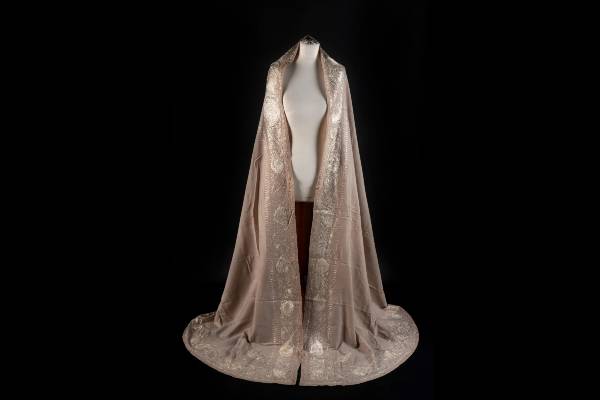
The beautiful buff-coloured shawl, delicately embroidered with silk shells and scrolls along its border, went under the hammer at Anderson & Garland auctioneers in Newcastle in October. It sold to an individual bidder, Mr Heath St John from Bromley in London, for £820.
The quality and condition of the shawl suggests it was treasured but rarely worn – thought to be one of the many gifts Grace and William Darling received for their bravery in rescuing survivors from the wrecked SS Forfarshire in 1838.
The team at the Grace Darling Museum – which is run by the Royal National Lifeboat Institution (RNLI) – were overjoyed when Mr St John offered to donate the shawl to the museum’s collection. The piece goes on display from today, Thursday 18 December, a fitting conclusion to the year of Grace Darling’s 210th birthday.
The daughter of a lighthouse keeper, Grace Darling captured the imagination of Victorian society when she and her father William risked their lives to rescue nine survivors from the wrecked SS Forfarshire on 7 September 1838. Aged 22, Grace helped William row their wooden coble out to the stricken paddle steamer, and held it steady in the waves as he pulled survivors aboard.
Her extraordinary act of bravery became internationally known, making front page news and even reaching Queen Victoria. She became the media celebrity of her day and was showered with honours, including the RNLI's Silver Medal for Gallantry.
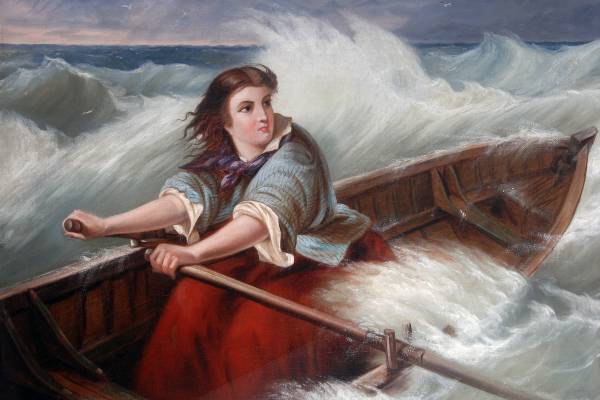
Well-wishers from around the world became competitive about sending Grace and her family a raft of gifts. They ranged from the practical to the ornate – status symbols prized by high society but of little relevance to the Darlings’ modest way of life on the Farne Islands. The museum’s collection holds a range of these gifts, from sewing sets to a glass walking stick.
Following Grace’s death from tuberculosis just 4 years after the famous rescue, gifts and mementoes would have been shared around the family and sold off from time to time to settle debts. The auction lot came with a typed letter of provenance to Mr Ernest William Greenwood, publisher Greenwood Bros Printers Ltd, South Shields. It refers to the shawl ‘belonging Grace Darling, (note), this article belongs to the late George Barclay's estate’. The shawl was being held by Greenwood as collateral against a book to be published.
The donor had initially hoped the shawl could go on display in Grace’s former home, Longstone Lighthouse, but ultimately chose the RNLI charity’s Grace Darling Museum, where more regulated temperature and light conditions will help preserve this precious piece of Grace’s story for generations to come.
Visitors to the museum will see the shawl take its place alongside other gifts the Darling family received, and some of Grace’s daily clothing. These include shorter, more practical shawls and part of the blue and white striped dress she wore during the rescue.
Andrew Lewis, RNLI Heritage Development Manager, said: ‘Seeing this shawl come home to Bamburgh and go on display at Christmas is a gift to all the volunteers at the Grace Darling Museum. They give so much time and care to bring the story of this unassuming heroine to life.
‘This new addition to our collection gives a fascinating insight into the experiences of Grace Darling after the rescue – and the rather romanticised view Victorian society had of her daily life.
‘It’s unusual for us to acquire a new item with such a close connection to Grace. So we’re looking forward to welcoming new visitors to see this beautiful piece, and researching more about its provenance.’
Explaining his interest in the piece, the donor Mr Heath St John [pronounced sinjun] said: ‘Important though names and dates are, they don't offer any tactile, you might even say emotional, involvement. They don't stimulate any human sympathy, however mentally stimulating they might be.
‘I think in recent decades the daily ephemera of life, the curious, the quaint, have come to be felt as a more authentic way of trying to understand past peoples, and hence our own place in the natural order of things, which for me makes life more purposeful.
‘It feels very gratifying to see the shawl go on display. I hope it will bring the story of Grace and William Darling’s bravery to many new generations.’
This story is being shared as part of the RNLI’s Christmas Appeal. To help the charity continue its lifesaving work, visit RNLI.org/WinterAppeal.